Ask around any 4x4 Facebook group about off-road caravans and you'll get thirty opinions before breakfast. Everyone has a brand they swear by, one they'd never touch, and a mate whose "off-road" caravan shed a panel on its first proper gravel pass. That noise is exactly why buying one feels riskier than it should.
This guide cuts through it. Whether you're comparing your first off-road caravan buying guide south africa search results or trying to decide between a shiny new build and a well-used one with a story, you'll walk away with an actual framework: what separates a genuine off-road caravan from a glorified tar-road unit, what the law says about towing it, what to check before a deposit changes hands, and what it really costs to own once the novelty wears off.
If you're still not sure ownership is the right move yet, it's worth reading this first before you commit to anything. If you've already made peace with buying, keep reading, then go browse off-road caravans for sale once you know what you're looking for.
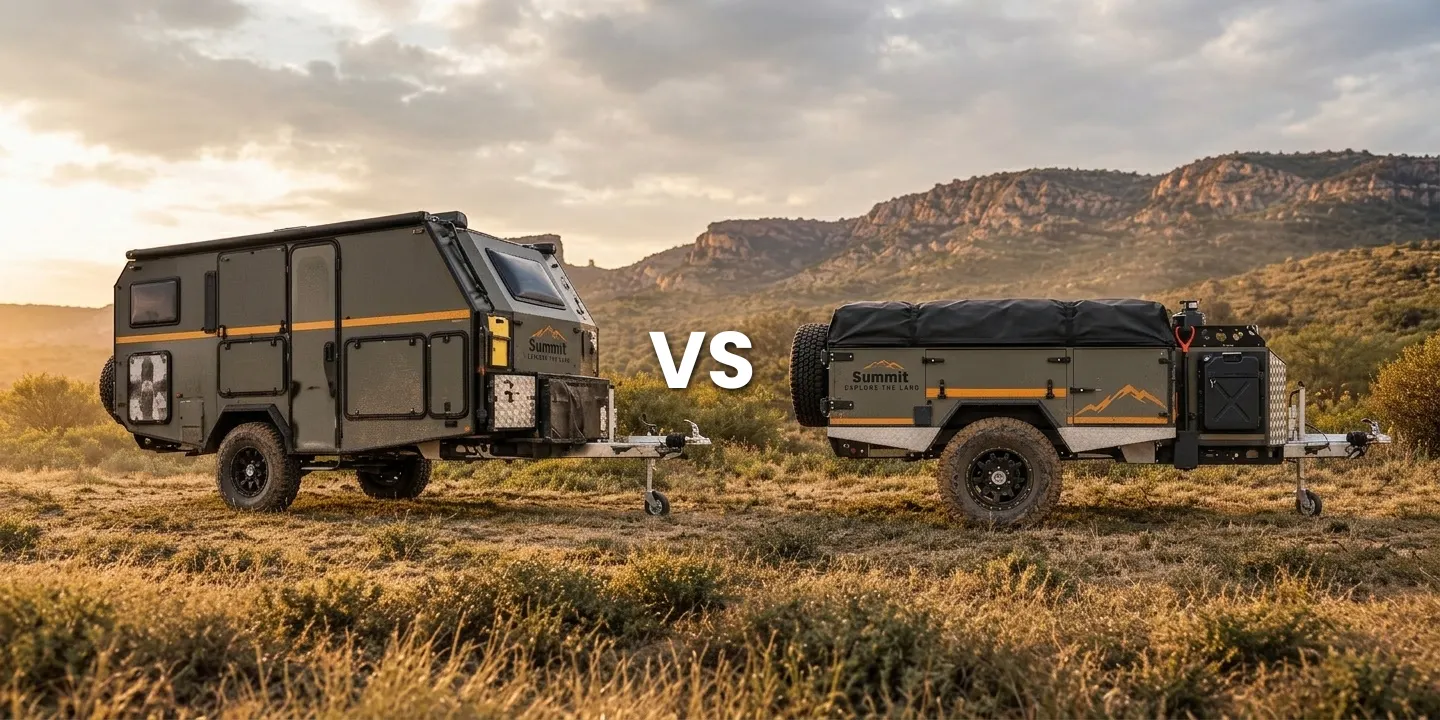
Off-Road Caravan, Camper Trailer, or Teardrop?
Not everything marketed as "off-road" actually is one, and the three most common options on the South African market solve different problems.
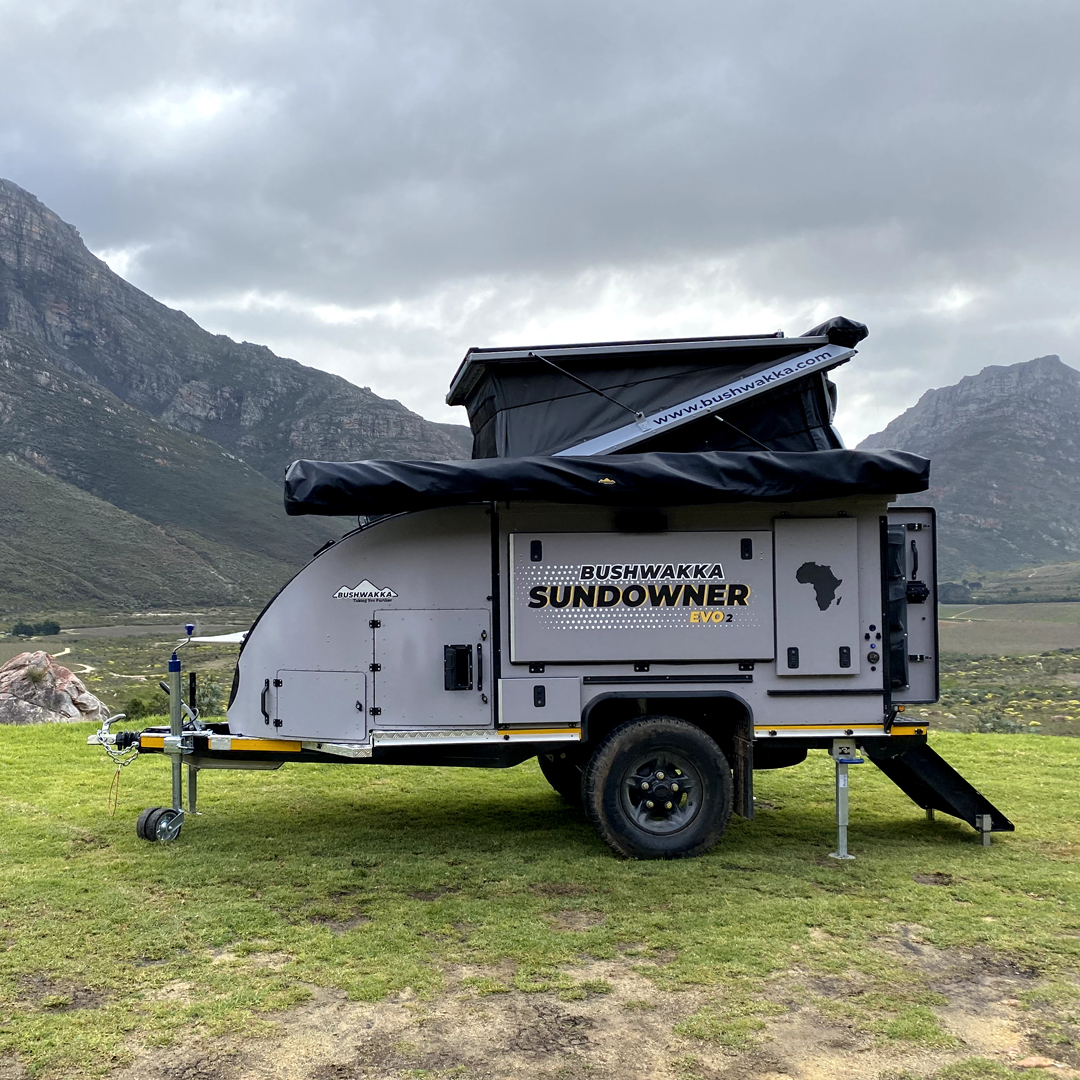
An off-road caravan is a fully enclosed, stand-up living space on a reinforced chassis, usually running off-road suspension, raised ground clearance, and its own kitchen, beds and often a bathroom, built in.
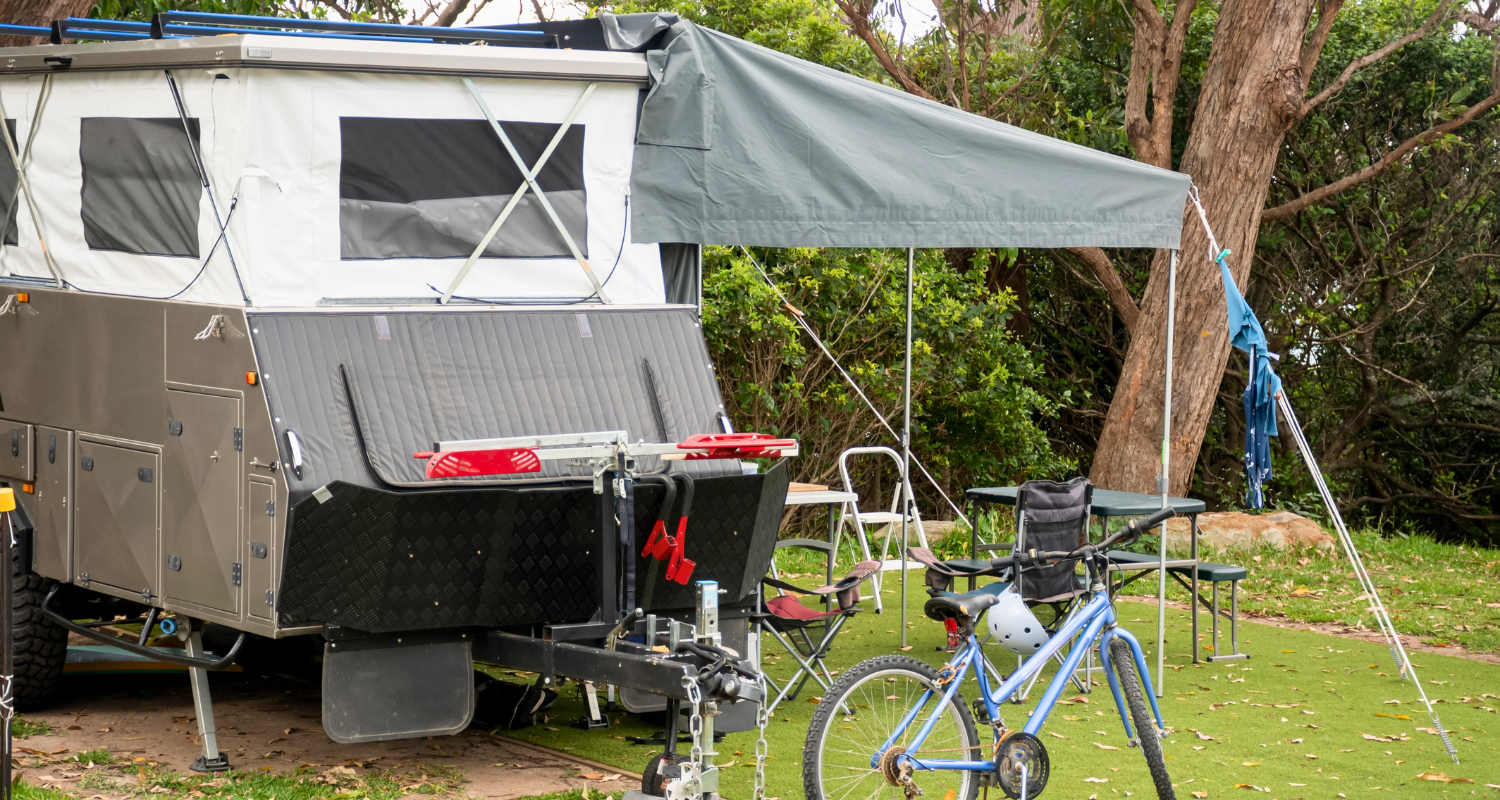
A camper trailer folds out from a low, compact trailer into a canvas tent-and-annexe setup. It’s usually cheaper, lighter, and easier to store, but with less weather protection and less standing comfort in bad weather.
A teardrop is smaller again: a sleeping pod for two with a rear "galley" kitchen, built for simplicity rather than serious off-road punishment, no matter how rugged some look parked at a trailhead.
If you want genuine off-grid comfort on rough roads and you're comfortable towing something substantial, an off-road caravan earns its price tag. If you want lighter, cheaper and more forgiving, a camper trailer or teardrop may suit you better.
New or Pre-Owned?
This is the decision many buying guides avoid because they rarely cover both options properly. Buying new gives you more control, while buying pre-owned can offer far better value. The right choice depends on your budget, timeline, and how certain you are about the setup you need.
Buying New
A new off-road caravan lets you choose the layout, off-grid equipment, finishes, and optional extras from the start. You’ll also have the protection of a manufacturer’s warranty.
The catch is that you may be buying a build slot rather than a caravan that’s ready to collect. Depending on the manufacturer and the level of customisation, the wait can range from a few weeks to several months.
You may also need to pay a substantial deposit, often between 30% and 50%, to secure your place in the build queue. Before paying anything, get the warranty terms in writing and confirm:
What components and problems are covered
How long the warranty lasts
Whether servicing requirements affect the warranty
Whether the warranty transfers to a new owner if you sell the caravan
Buying Pre-Owned
A pre-owned off-road caravan usually costs less and can often be collected almost immediately. It may also come with useful upgrades that the previous owner has already paid to install.
There’s another potential advantage. A caravan that has already completed several real trips has had time to reveal early build, fitment, or equipment problems. A three- or four-year-old unit that has been properly maintained and is still performing well can be a reassuring sign.
However, you’re also inheriting someone else’s maintenance history. Water damage, worn suspension components, neglected seals, electrical faults, and poorly installed modifications aren’t always obvious during a quick viewing. That’s why the inspection checklist later in this guide matters even more when buying pre-owned.
Listings such as this 2010 Conqueror Companion show the type of value that becomes available when you’re no longer paying the premium attached to a brand-new build.
Not Ready to Buy Yet?
You don’t have to make the decision based on specifications and showroom visits alone.
Renting first gives you the chance to test different layouts, towing setups, storage options, and off-grid features on real trips. After a few weekends away, you’ll have a much clearer idea of what you’ll use and what only sounded useful on paper.
Read more about why 4x4 camper rental in South Africa can be a smarter alternative to ownership before committing to either a new or pre-owned caravan.
What Actually Matters: Chassis, Suspension and Build Quality
Strip away the marketing, and an off-road caravan’s durability comes down to three things: the chassis, the suspension, and how well the body keeps out dust and water.
Start With the Chassis
The chassis needs to be properly rated for the caravan’s gross vehicle mass (GVM), not simply built to look heavy-duty.
Its finish matters too. Hot-dip galvanising generally offers better long-term protection against rust than a painted or powder-coated finish, especially if you’ll be travelling on gravel roads or spending time near the coast.
Check underneath for:
Visible rust or damaged galvanising
Cracks, poor welds, or signs of previous repairs
Bent sections or fresh paint that may be hiding damage
A clearly stated GVM and payload rating
Look Closely at the Suspension
Genuine off-road caravans commonly use independent suspension, with trailing-arm and coil-over systems among the most familiar setups. These are designed to handle corrugations, uneven ground, and greater wheel movement.
A basic leaf-spring axle isn’t automatically a deal-breaker, but it may be better suited to tar and maintained gravel roads than demanding off-road travel. The suspension setup is often one of the clearest signs of whether a caravan was built for rough terrain or simply styled to look the part.
Don’t Ignore Dust and Water Sealing
Even a strong chassis and capable suspension won’t mean much if every gravel road fills the caravan with dust.
Check carefully around the windows, door frame, roof joins, storage hatches, and external fittings. Poor seals are a common source of dust and water ingress, and they’re much easier to spot before buying than to repair after a few long trips.
The pre-purchase checklist later in this guide explains exactly where to look and which warning signs shouldn’t be ignored.
Weight, Towing Capacity and the 85% Rule
Before you fall in love with a caravan, check whether your vehicle can tow it safely, not just whether it can tow it on paper.
Start with two figures:
Tare: The caravan’s empty weight
GVM: The maximum weight once it’s loaded with water, gas, food, luggage and equipment
Your vehicle’s stated towing capacity matters, but it doesn’t tell you everything about stability. The 85% rule is a commonly used guideline suggesting that a fully loaded caravan should weigh no more than around 85% of the tow vehicle’s kerb weight.
It isn’t a legal requirement, but it can provide a more comfortable safety margin, particularly for inexperienced drivers or when towing in crosswinds, at highway speeds or over corrugated roads. The closer the caravan gets to the tow vehicle’s own weight, the more carefully the combination needs to be matched and loaded.
South African law also places limits on braked and unbraked trailers based on the tow vehicle’s tare and rated towing capacity. Most proper off-road caravans are therefore fitted with brakes as standard.
For a clearer explanation of the legal requirements, see Arrive Alive’s guide to towing vehicles.
The Driver's Licence You'll Need (Code B vs Code EB)
This is the part almost nobody checks before they buy, and it's the one with the sharpest teeth if you get it wrong.
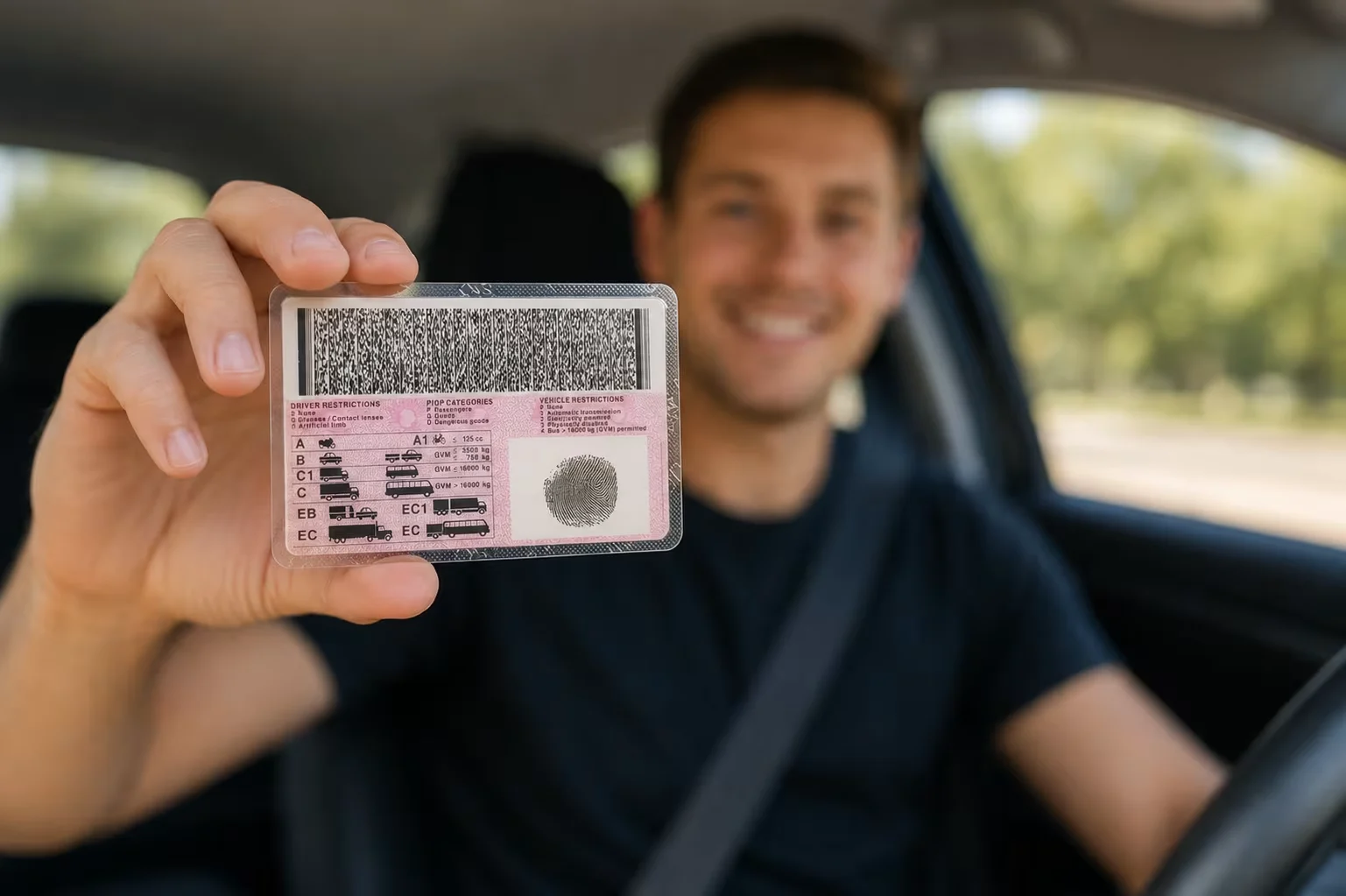
Since South Africa moved to credit-card format licences in 2000, standard new driving licences have been issued as Code B, which only permits towing a trailer weighing less than 750kg fully laden. Anything heavier, which includes the overwhelming majority of off-road caravans, legally requires a Code EB licence. According to Arrive Alive, the Automobile Association has warned that "code B drivers who are towing trailers heavier than 750 kgs are doing so illegally," and News24's reporting on the same AA guidance confirms there's no simple upgrade path, you have to retake the learner's licence test and repeat your driving test with a trailer attached, at a testing station equipped to assess it.
Beyond the legal risk, there's a financial one: if you're towing illegally and you're involved in an accident, your insurer may be within its rights to decline the claim entirely. It's worth confirming your licence code and your caravan's laden weight line up before you sign anything, not after.
Off-Grid Systems: Power, Water & Comfort
The whole point of an off-road caravan is being able to camp somewhere without a power point or a tap, so the off-grid systems deserve real scrutiny rather than a glance at the spec sheet.
Power usually means a dual battery setup paired with solar panels, sized to run your fridge, lighting, and water pump for several days without needing to plug in or start the tow vehicle. If you're new to how these systems actually work, our beginner's guide to dual battery setups is worth reading before you start comparing specs between models, since "lithium" and "100Ah" mean very different things depending on how the rest of the electrical system is wired.
Water capacity matters just as much: check total tank litres against how many people you're travelling with and how many days you realistically go between refills, and don't assume a bigger tank is automatically better once you factor in the extra weight it adds when full. Gas systems, slide-out kitchens, and any indoor bathroom or shower all add convenience, but they also add weight, complexity, and more seals that can fail which worth weighing against how often you'll actually use them.
Popular Off-Road Caravan Brands in South Africa
Brand reliability comes up more than almost anything else in South African 4x4 forums and Facebook groups, and for good reason: resale value and peace of mind both hinge on it. Here's a realistic look at some of the established names, with real, currently listed examples so you can see actual pricing rather than guesswork.
Conqueror has been building off-road trailers and caravans in South Africa for over three decades, starting with military-grade trailers before moving into the leisure market; that heritage still shows in how conservatively their chassis and running gear are engineered. A used example like the Conqueror Companion shows what the brand's resale market looks like at the more accessible end.
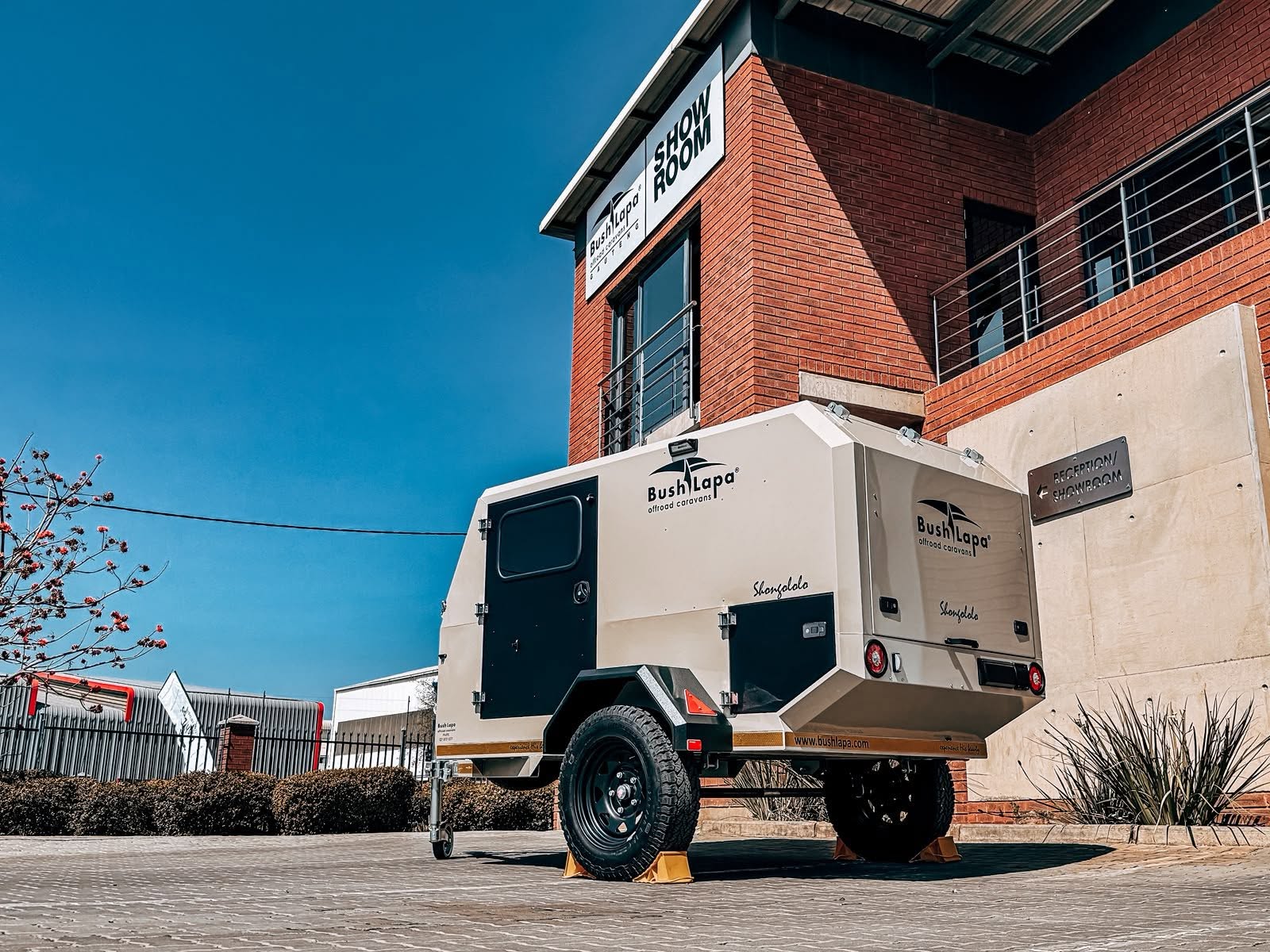
Bush Lapa, founded in Paarl in 2010, has become one of South Africa's most popular off-road caravan brands on the strength of a simple pitch: rugged 3CR12 stainless steel chassis and body construction, lightweight aluminium interiors, and fast setup times. The Bush Lapa Ratel 4 represents the brand's larger, flagship range.
Jurgens is South Africa's oldest and largest caravan manufacturer, dating back to 1952, and was responsible for Africa's first mass-produced off-road caravan, the Xplorer, in 1998. That off-road lineage continues in the Xcape range, and the Jurgens Xcape currently listed shows the kind of value the brand offers on the used market.
Jaguar Caravans is a newer, smaller manufacturer building stainless steel off-road caravans, with the Kovu range being its best-known off-road model. The Jaguar Kovu 4, listed new, gives a sense of current pricing on a factory-fresh build.
Sprite built its name on the tar-road market with affordable, practical caravans, but its Tourer range extends that reputation into off-road-capable territory for buyers who want a recognisable, established brand without the premium price tag of a dedicated off-road specialist.
If you'd rather browse the full current range than read about it, this 2024 Berg CX3 Luxury Condo is another real example worth a look, sitting at the more luxury end of what's currently available.
Pre-Purchase Inspection Checklist (New and Used)
Whether you're signing a build contract or handing over cash for something already on the road, work through this before you commit.
Buying new:
Get the warranty in writing with what's covered, for how long, and whether it transfers if you sell.
Confirm the deposit amount, the build slot timeline, and what happens if the build runs late.
Check the GVM, tare weight, and towball weight against your actual tow vehicle, not the vehicle you're planning to upgrade to next year.
Ask what happens to your deposit if you need to change the spec partway through the build.
Confirm what pre-delivery inspection the dealer does, and get it in writing.
Buying used:
Chassis and suspension: check for rust (especially around welds), cracked or repaired chassis rails, and worn suspension bushes or shock absorbers.
Brakes and coupler: test the brakes actually engage under load, and check the coupler and jockey wheel for wear or play.
Seals: inspect around every window, hatch, and the door frame for water staining or soft spots inside, it’s the single biggest tell of a caravan that's been leaking.
Electrical: test the battery, solar controller, and every 12V and 220V point, and ask for service history on the system.
Gas: check the gas certificate is current and ask when the system was last pressure-tested.
Tyres: check date codes, not just tread — caravan tyres age out well before they wear out, and a good-looking tyre can still be years past safe use.
Paperwork: confirm the registration, ownership history, and that there's no outstanding finance against it before any money changes hands.
Budget: The True Cost of Ownership
The sticker price is the smallest number in this whole decision, and it's the one everyone fixates on.
Once you own an off-road caravan, insurance, servicing, tyres, storage (if you don't have space at home), and periodic repairs to seals, electrical systems, and running gear all continue whether you're using it or not. None of that shows up on the price tag, but all of it shows up in your bank account eventually.
If you're financing the purchase rather than paying cash, it's worth working out what the monthly repayment actually looks like before you fall for a specific model. You can estimate your monthly repayments using our finance calculator before you start negotiating on price. It's also worth checking how 4x4Things' built-in insurance works so cover isn't an afterthought you sort out the week before your first trip, particularly given how easily an uninsured or improperly licensed tow can turn an accident into a financial disaster, as covered above.
Where to Buy: Using 4x4Things' Marketplace
Once you know what you're looking for, whether that’s an off-road caravan or camper trailer, new or pre-owned, and roughly what your budget covers, the actual buying process should be the easy part.
4x4Things' marketplace lists real, currently available off-road caravans from private sellers and dealers across South Africa, with pricing, location, and condition laid out upfront rather than buried in a phone call.
Before you commit, cross-check any listing you're serious about against the inspection checklist above. You can also use the seller's contact details to ask the direct questions covered in this guide, including the chassis condition, service history, gas certification, and whether the price is negotiable.
Once you've found something worth a closer look, it's also worth working through our must-have 4x4 gear checklist so your first trip isn't the moment you discover what you forgot to pack.