Rugged desert tracks for one getaway, dramatic mountain passes for the next – the South African landscape holds varied, exciting possibilities.
The right off-road caravan can make or break an adventure, and two stand-out options for B-license travellers are the Vagabond Rogue and Jaguar Zazu 2. But which of these locally made 750kg caravans is the right one for you?
The quick answer is that the Rogue offers better fuel economy and is suited to those primarily travelling coastal dirt roads, sandy areas and farm tracks. The Zazu 2 is better suited to those with more rugged goals in mind. If you’re interested in the kind of off-roading that takes you down long-haul corrugated dirt roads, then this is the more practical choice.
Vagabond Rogue vs Jaguar Zazu 2 at a Glance
Both the Rogue and Zazu 2 are built for a certain kind of travel: one or two light-travelling people who plan on moving off the beaten track. That means these caravans are compact, easy to tow, and designed to withstand the impact of genuinely rough terrain.
With that said, there are key differences in their shape, size, and body material. Here’s a brief overview of the key features of each:
Why 750kg GVM Matters: Towing Either One on a Code B Licence
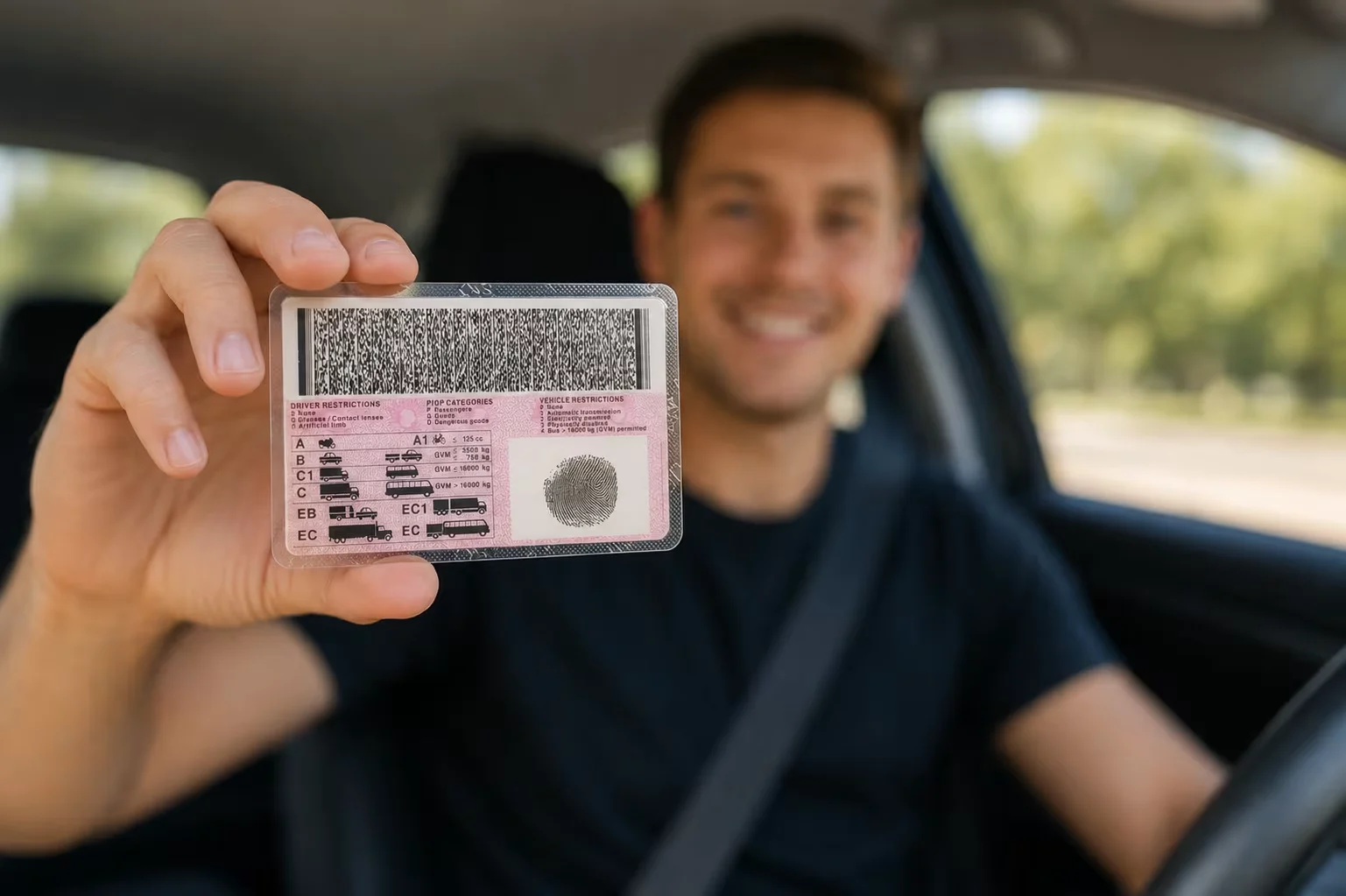
Legally, drivers with a B license (your standard light-vehicle license) aren’t allowed to tow a caravan with a gross vehicle mass between 751 kg and 3,500 kg.
That requirement can be a major barrier to off-road adventures, regardless of whether you’re renting or looking to buy. Even if the caravan’s tare weight is slightly below that threshold, once you start adding gas, water and equipment, the total mass can quickly exceed the legal limit for a Code B driver.
In South Africa, a small caravan like the Jaguar Zazu 2 or Vagabond Rogue allows you to venture off-road without an EB license. That’s also meaningful if you have a lighter-weight crossover or compact SUV like a Honda CR-V, Kia Sportage or Hyundai Tucson. You don’t need a Hilux or a Ford Ranger to tow either one of these caravans.
Build and Body: Fibreglass Teardrop vs Stainless Steel Box
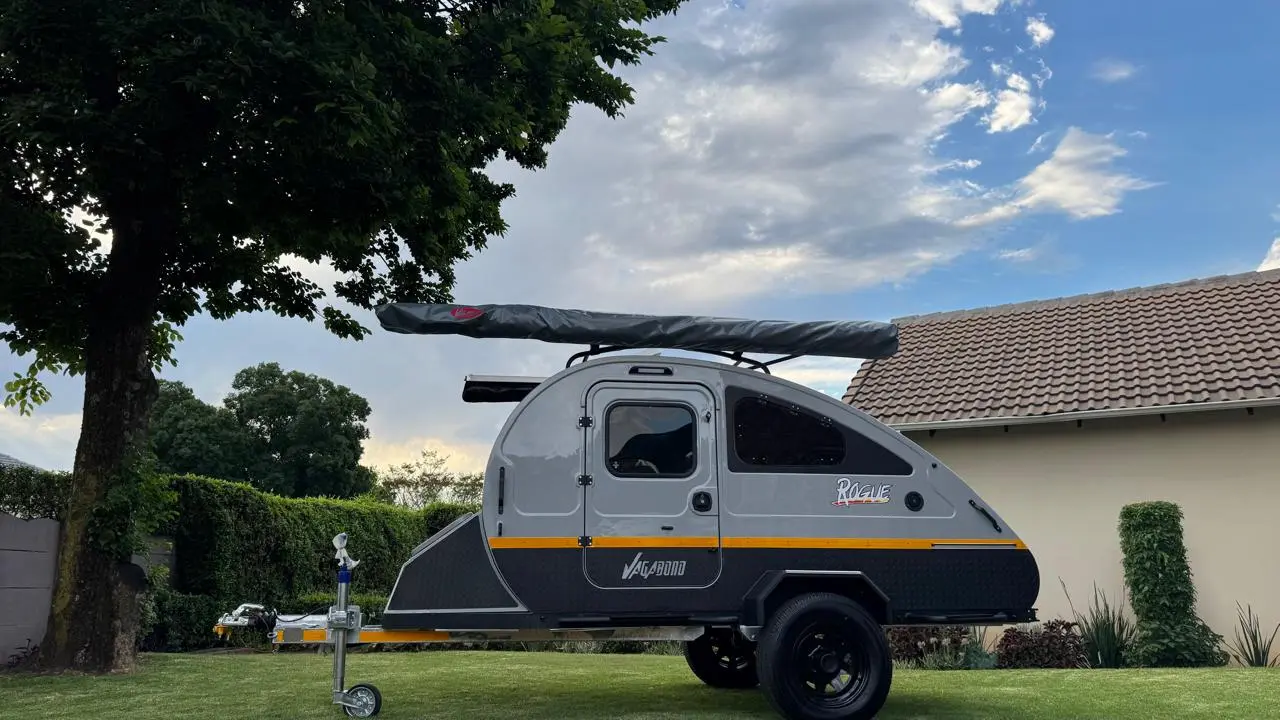
Here’s where we start narrowing it down. The Rogue, Vagabond’s flagship teardrop caravan, is constructed from monocoque fibreglass and moulded as one continuous piece.
Why does that matter?
For one, it aids dust resistance – an important consideration if you’re planning a trip to the Kgalagadi or the Cederberg. For another, the seamless construction means that joints aren’t constantly working against each other, which contributes to long-term durability.
The teardrop shape of the caravan comes with a downside: less usable interior room. While the overall length and width are 4.60 m by 2.15 m, the interior length and width are 2.20 m by 1.50 m. With an interior height of 1.35 m, there’s also limited headroom. Expect a bit of ducking.
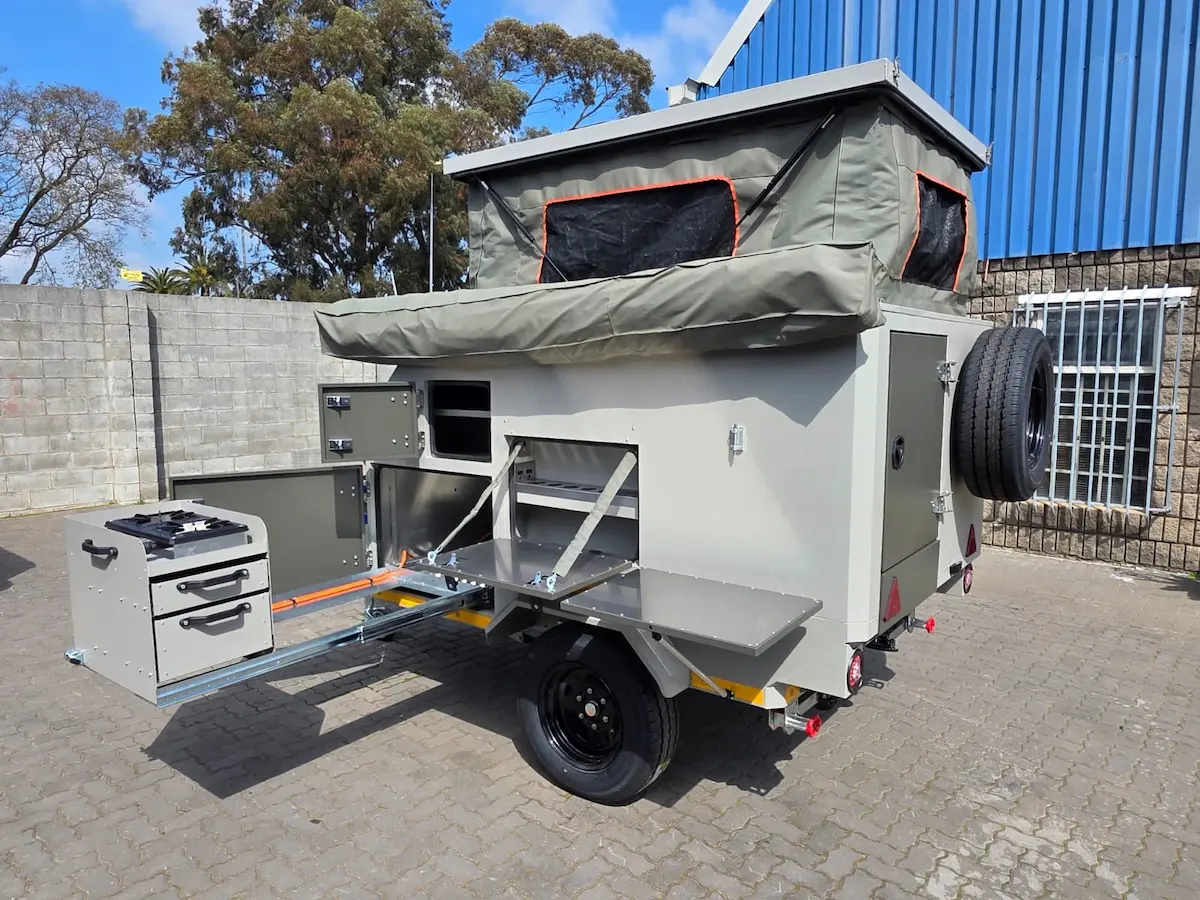
Meanwhile, the Jaguar Zazu 2 is box-shaped and made from 3CR12 stainless steel, a corrosion-resisting chromium alloy. If you’re looking for an off-road caravan that can withstand harsh conditions and face off against rough terrain, then the Zazu takes the lead.
At 2.50 m by 1.50 m, this caravan is more compact than the Rogue, and the square design means the interior space can be used efficiently. There is also significantly more headroom than you’d get with a teardrop design, which can contribute to overall comfort.
The downside is the steel’s weight. The Zazu has half the payload of the Vagabond caravan despite being half the size.
Off-Road Ability: Chassis, Axle, Suspension and Brakes
Travelling with the Rogue feels like towing a well-behaved puppy. Its light weight coupled with a 1,600 kg braked axle and eight-leaf springs make for easy handling. The caravan rides on a galvanised chassis wrapped in checker-plate protection, a combination that aids impact protection and corrosion resistance.
The Zazu 2’s combination of a 1,600 kg solid beam unbraked axle paired with 8-blade leaf springs provides a robust suspension combination. At 750 kg, this small caravan just meets the legal limit for an unbraked trailer. Like the body, the chassis is constructed from 3CR12 stainless steel.
Living Inside: Bed, Kitchen, Water and Power
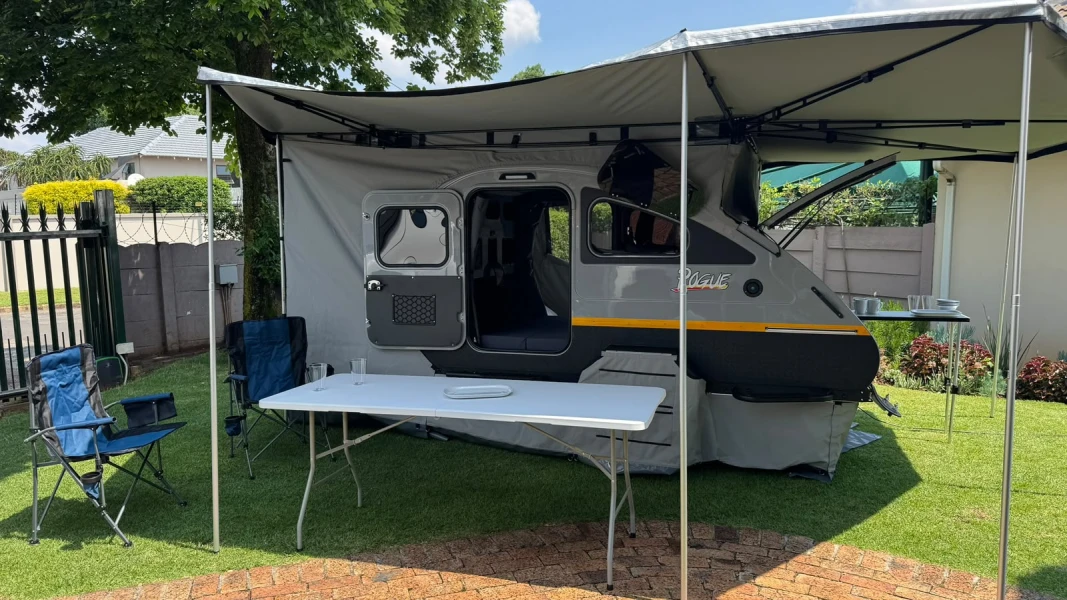
With a 2.05 m by 1.42 m extra-length mattress that can fold into a couch, the Vagabond Rogue offers a decent amount of comfort. The polyurethane foam used for insulation keeps the caravan warm during winter and cool in the summer.
Additionally, there’s a good amount of storage, with nine interior compartments, and the kitchen setup is a fully integrated galley. Features include a dual-zone fridge/freezer, gas stove and two grocery compartments. Base models come with a 16-piece crockery set.
As for water and power, the Rogue comes equipped with a 60-litre water tank plus 12V and 220V sockets with a volt meter, as well as USB ports.
As for the Jaguar Zazu 2, the compact box sleeps two people on a side-folding double mattress. You’ll also find built-in cupboards for clothes, and the Zazu comes standard with a 270° awning.
Moving into the kitchen, you’ll get a compact kitchenette with a fridge/freezer and room for pots, pans, crockery and cutlery. (A fully equipped kitchen is an optional extra.) Power is supplied by 220V inlets, and a 100-litre stainless steel tank stores water.
You can make either caravan your own by adding extras such as a gas geyser, gas-bottle holder and solar. Other optional add-ons can create more comfortable living arrangements and more sleeping room. If you eventually decide to rent out your caravan, these extras can boost the rental value.
Payload and Price: What You Actually Get for Your Money
The price of a Vagabond Rogue caravan starts at R289,000, and the Jaguar Zazu 2 starts at R280,000. Optional add-ons will increase the price of both, which is something to bear in mind. If you’re buying a pre-owned caravan, the exact specifications may differ from the manufacturer’s base model if the owner has had the caravan customised with add-ons. This will also influence the price.
Why Fibreglass vs Stainless Steel Matters
While we are comparing two 750 kg off-road caravans that sleep two, there are significant differences that shape what you’re getting. Those differences go beyond the kitchen inventory.
Stainless steel is denser and heavier compared to fibreglass. We see that weight difference in the 100 kg payload of the Zazu 2, which is half that of the Rogue’s 200 kg. The higher payload may look like better value for money, and it may well be, but only if you need the extra weight.
With that said, we can’t ignore the fuel consideration. In 2026, the cost of heavy 4x4 setups is very different from what it was a decade ago.
A better payload means a tank of diesel – a prized commodity at this point – gets you further for less. Aerodynamics come into play here, too. The rounded teardrop shape of the Vagabond caravan creates contours that allow air to move more efficiently at high speeds.
Which Should You Buy? Rogue vs Zazu 2 by Type of Trip
The Vagabond Rogue’s interior design offers comfort, and the nine interior compartments lend themselves to a longer trip. Additionally, the polyurethane insulation is ideal for the extreme conditions of regions like the Kalahari, and the seamless design makes a difference in dust-heavy areas like the Kgalagadi.
If you’re someone who likes to camp in the same spot for a week or two, or if you’re more of a coastal adventurer, then the Rogue is probably the better option. The storage space and fibreglass structure cater to both extended stays and saltwater exposure.
Meanwhile, if your trips are more rugged, the Zazu 2’s durability stands out. As a compact stainless steel box, it’s built to tackle challenging terrain. The caravan stands up to the occasional rock strike well, and it’s designed to handle the stress of corrugated roads and rough terrain.
Where to Find Both
There are a few options here.
You can work directly with the manufacturers to customise your caravan to your needs. Vagabond is a South African manufacturer with two teardrop models: the Rogue and the Roamer, an on-road, lower-priced alternative.
Jaguar, also a local manufacturer, produces a three-model range of off-road caravans. Each build is custom, so you would spec out your own layout and features.
Alternatively, you can purchase a pre-owned caravan. But if you’re still not sure which small caravan suits you best, why not rent first? You’ll find Jaguar Zazu 2s and Vagabond Rogues among our listings.